New Method: Typing of Salmonella Strains via RT-PCR
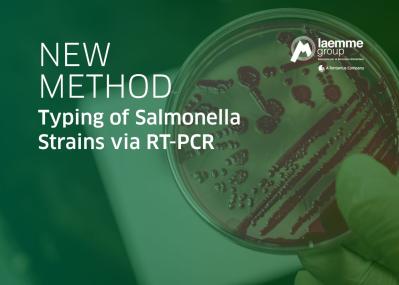
Salmonellosis is an intestinal infection caused by Salmonella, transmitted through contaminated food or water, as well as contact with infected animals. Salmonella can be found in raw or undercooked meat, raw eggs, unpasteurized milk, fresh cheeses made from unpasteurized milk, and fruits and vegetables irrigated with contaminated water.
Approximately 2,500 Salmonella serotypes have been identified, but the strains most frequently responsible for infections are Salmonella enteritidis and Salmonella typhimurium, commonly referred to as the major Salmonella serovars. Interest in typing Salmonella isolates continues to grow.
In Italy, the new National Plan for the Control of Salmonellosis in Poultry 2025–2027 (PNCS) includes full typing—of both major and minor serovars—of Salmonella strains isolated through self-monitoring programs.
Laemmegroup has introduced a new method based on a commercial kit that enables the typing of Salmonella isolates using RT-PCR. This approach detects genetic variation at 21 loci distributed across the entire Salmonella genome, allowing for the identification of the isolate’s genovar. The generated genovar is then compared with those of previously characterized strains in the database. If a match is found, the system identifies the isolate’s species accordingly.
Currently, the database includes the 107 most prevalent Salmonella strains and is continuously expanding. If the isolated strain is not yet present in the database, the system still assigns it a unique genovar. Should a strain of the same species be processed at a later time, it will be assigned the same genovar, enabling correlation of results obtained at different time points.
This method offers the advantage of being automated, reducing the subjectivity associated with traditional serotyping. The analysis time is approximately 2.5 hours, which is significantly shorter than the conventional method based on antisera. The method is expected to receive ISO 17025 accreditation by the end of 2025.
If you would like more information about this topic, please contact:
- Dr. Alessandro Pessione - Biological Area Manager – apessione@laemmegroup.it