Color and Perception: The invisible language of food
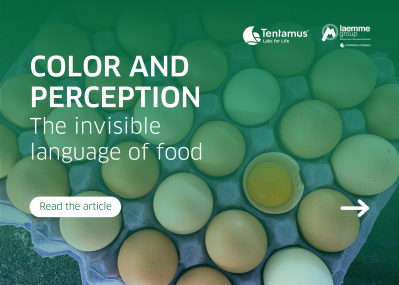
Color is one of the first elements guiding the perception of a food product’s quality. A golden yolk or intensely yellow pasta naturally evoke healthier and more nutritious products, yet behind these shades lies a complex system of research, regulation, and production that brings together science and sensory perception. According to Regulation (EC) No. 1831/2003, the use of additives and colorants in feed is permitted provided they are safe and traceable. These substances, whether natural or synthetic, improve not only the appearance of products but also their commercial acceptability. Surveys conducted by the Bureau Européen des Unions de Consommateurs (BEUC) show that yolk color is perceived as an indicator of freshness and quality, alongside albumen consistency and shell strength.
In the latest issue of T-Magazine, we explore how color influences egg-based products, combining consumer insights, new analytical techniques, and sustainability initiatives.
This article is particularly meaningful to us as it stems from work carried out with Eurovo, a partner that shares our commitment to quality, research, and continuous innovation. The article is authored by Alessandro Capatti, Director of Quality Assurance for Egg Products and Laboratories at the Eurovo Group, and Valeria R. Giancotti, Technical Manager at Laemmegroup.
The Role of Pigments in Food Color
Egg pigmentation derives from carotenoids present in feed, transferred through the hen’s metabolism to the yolk. Lutein and zeaxanthin generate yellow tones, while capsanthin and canthaxanthin produce more orange or reddish hues. Natural sources such as corn, marigold, or paprika provide bioavailable pigments, but they are often unstable; for this reason, research also uses synthetic equivalents that ensure color uniformity and consistency over time. Corn-based feeds, rich in lutein, generally produce a more intense coloration than wheat-based feeds, confirming the greater biological effectiveness of these pigments.
Spectrophotometric and chromatographic (HPLC) analyses, in accordance with UNI EN ISO 17550:2022, show that increasing colorants in feed raises carotenoid concentration in the yolk up to a stable physiological equilibrium. This highlights the direct relationship between nutrition, animal metabolism, and the visual characteristics of the product.
Egg color affects not only the appearance of the shell or yolk but also the aesthetics of processed products such as:
- mayonnaise
- egg pasta
- sponge cake
- creams
A warm, uniform tone is associated with higher quality and authenticity, increasing the product’s commercial value. Color thus becomes not only a technical parameter but also an effective marketing tool, capable of connecting producers and consumers through sight.
Sustainability and Nutritional Value
In recent years, research has focused on natural and sustainable sources, reducing the environmental impact of extraction and production processes. At the same time, interest in the nutritional benefits of carotenoids is growing: lutein and zeaxanthin, for example, contribute to retinal protection and cardiovascular health. A more intensely colored yolk may therefore indicate a higher presence of bioactive compounds, combining aesthetic and nutritional value.
Color thus represents the visual synthesis of an entire supply chain, from raw material cultivation to the consumer’s table. It tells the story of quality, sustainability, and the identity of a food product, becoming a symbol of trust and transparency.
Laboratory Analysis and Quality Control
Ensuring legal compliance and supply chain integrity relies on rigorous analytical controls.
The Eurovo laboratory in Occhiobello, accredited for the detection of natural and synthetic carotenoids, collaborates with the Laemmegroup laboratory in developing advanced analytical methods based on UNI EN 17550:2022. This protocol allows the quantitative determination of pigments such as:
- Astaxanthin
- Canthaxanthin
- Capsanthin
- Beta-apo-8'-carotenal (E160e)
- Citranaxanthin
- Ethyl ester of beta-apo-8'-carotenoic acid (E160f)
- Lutein
- Zeaxanthin
- Lycopene
- Beta-carotene
with a limit of quantification (LOQ) of 0.3 mg/kg.
The techniques used—chromatography and spectrophotometry—fully comply with methods recommended by the European Commission, ensuring traceability, repeatability, and reliability of results. These analyses are not only for regulatory compliance but also represent a pillar of quality and innovation:
- they allow monitoring of pigment effectiveness,
- optimization of feed formulations,
- and guarantee products that meet the expectations of increasingly quality-conscious consumers, attentive to aesthetics, health, and sustainability.
Ultimately, color is the connecting thread between science and perception, between laboratory and kitchen, between the egg and the table. A technical parameter that becomes an emotional language, capable of telling the story of food.